After the Storm
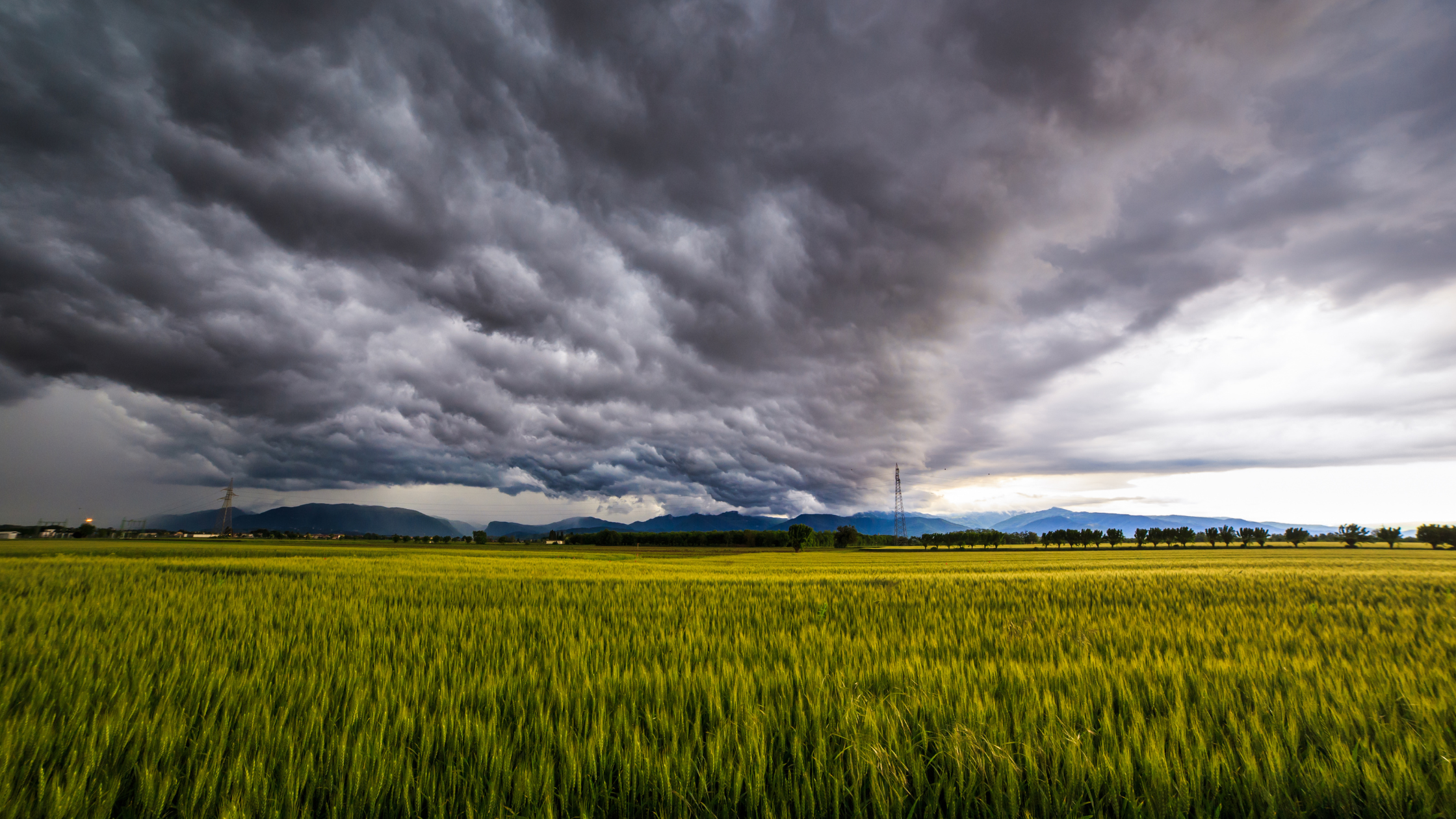
After the Storm
By: Stacey Dorenfeld
A Jewish student removes her Star of David necklace before walking into class. A father instinctively scans the exits at synagogue before sitting down beside his children. A mezuzah quietly disappears from a front door.
None of these moments make national headlines. But they stay with people quietly. Alone, they seem like moments. Together, they reveal a pattern.
We keep saying antisemitism is spreading like wildfire. But wildfire is no longer the whole story.
Antisemitism moves like every natural disaster at once. It floods conversations, drowning out reason. It spreads like smoke, choking truth until people can no longer see clearly. It erupts like an earthquake, shaking the foundation of safety Jews once believed existed in schools, workplaces, synagogues and even friendships. It crashes like a hurricane through communities, leaving destruction in its wake long after the headlines move on. And like a tornado, it can appear suddenly and violently, ripping through lives without warning.
What once felt unthinkable now feels disturbingly commonplace. People lower their voices when saying they are Jewish. Friendships fracture over a single conversation. Fear quietly settles into ordinary moments.
It is all starting to feel normal –the shrug, the silence. The “It’s complicated” response when Jewish people say they are afraid.
Hatred rarely arrives calling itself hatred. It seeps in gradually — through conspiracy theories disguised as activism and double standards wrapped in the language of justice; through online mobs, exclusion and the dangerous belief that somehow Jewish pain deserves an asterisk beside it.
History has shown us that antisemitism never really disappears. It just changes its clothes.
There is something deeply painful about watching people debate whether your fear is legitimate while you are already living inside it. Jews are often told simultaneously that antisemitism is everywhere and nowhere; that we are too sensitive, too loud and too privileged to be vulnerable. Somehow, our pain is deserving of suspicion. We are asked to prove our pain in ways others are not.
Somewhere in all that noise, people forget there are actual human beings underneath the headlines — children, students, grandparents, families trying to live ordinary lives while wondering whether ordinary life is still safe.
The scariest part of antisemitism is not simply that it exists. It is how quickly people learn to live beside it.
There is another danger we must acknowledge honestly. The word “antisemitism” is now used so frequently that it sometimes risks losing the urgency it was meant to carry. A warning repeated too casually eventually becomes wallpaper. The word antisemitism spoken carelessly risks becoming a fire alarm people stop responding to.
Not every disagreement or criticism is antisemitism. If everything is labeled hate, people eventually stop paying attention when real hate appears directly in front of them. That is dangerous for Jews, and it is dangerous for society.
I think we have to be precise when we use the word antisemitism. It is the targeting of Jews simply for existing. It is bomb threats against synagogues, harassment on college campuses, vandalism and threats. It is antisemitism when Holocaust survivors see history echo in ways they prayed they would never witness again.
But being cautious about overusing the word does not diminish the very real rise in antisemitism we are witnessing. Its rise makes it harder to dismiss. I know this because I have lived it.
I was beaten up for being Jewish in 1972. And again in 1978. I still remember the feeling of being hated for something I had no reason to be ashamed of. I never imagined I would be writing about this topic half a century later.
And yet, more than 50 years later, I find myself watching another generation of Jews questioning whether it is safe to visibly identify as Jews. I refuse to hide. I refuse to make myself smaller to make other people comfortable.
I will continue wearing my Star of David. I will continue saying proudly that I am Jewish. Everyone should feel proud of their heritage, their culture and who they are.
I spent enough years learning what it felt like to feel ashamed of being different. I refuse to go backward.
If only we could spend more time seeing the commonalities in one another instead of magnifying our differences!
And there’s something equally important we must recognize: Jews are not the only people carrying the weight of hatred. Too many people know what it feels like to be judged, feared or diminished simply for who they are. Hate rarely stays in one place for long.
That is why this moment cannot only be about defending Jews. It must also be about defending humanity. If we only stand against hatred when it affects us personally, then we have missed the lesson entirely.
The answer to hate cannot simply be louder outrage. It has to be light — real light. The kind that listens, protects and refuses to dehumanize others, even while fighting against being dehumanized ourselves.
Judaism teaches us to bring light where darkness tries to take hold. I have seen what that light can look like through my work with Hadassah.
At the Hadassah Medical Organization’s two world-class research hospitals in Jerusalem, doctors, nurses, patients and families come from every background — Jewish, Muslim, Christian, Black, Asian, Latino, religious and secular. Working and healing side by side, they care for one another, not because they are the same, but because they are human.
Medicine does not ask who you voted for, where your family came from or what language you pray in. It simply asks “How do we heal?”
In a world that often profits from division, there is something profoundly hopeful about people building bridges instead of walls. Sometimes peace begins in the smallest places — one patient, one doctor, one act of compassion at a time.
Perhaps one of the greatest acts of resistance available to us is choosing compassion in a world increasingly addicted to outrage, choosing unity in a culture profiting from division.
After floods, neighbors pull strangers from the water. After earthquakes, people dig through rubble searching for survivors they have never met. After fires, communities gather around families who lost everything.
Sometimes, after devastation, a rainbow appears — not because the storm was beautiful, but because something hopeful survived it.
Nature itself reminds us that devastation does not always get the final word. Neither should hate.
The Jewish people know this better than anyone. We are descendants of people who rebuilt after exile, pogroms, the Holocaust – after generations of being told we would disappear. Yet here we are. Still praying. Still gathering around Shabbat tables. Still raising children. Still singing. Still believing in humanity even when humanity has not always believed in us. Darkness does not build character. It reveals it.
We cannot often stop a storm from coming. But we can decide who we will be when it does. We can choose whether we stand at a distance adding to the noise or move toward one another with compassion, courage and humanity.